Skip to content
Table of Contents
Restaurant Agency Studio Review (2026) $43K Premium Bonus Package FREE!
Welcome to my in-depth Restaurant Agency Studio Review.
If you only have two minutes, here is the short version.
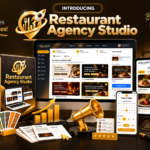
Restaurant Agency Studio is a WordPress-based website production system built by Dawn Vu under the DFYFortune brand. It launched on WarriorPlus on 15 September 2026 at a front-end price of $27, down from a stated regular price of $97. The pitch is simple: instead of building restaurant websites from scratch every time, you install one plugin, pick a design style, pick a restaurant niche, drop in the business details, and deliver a finished site.
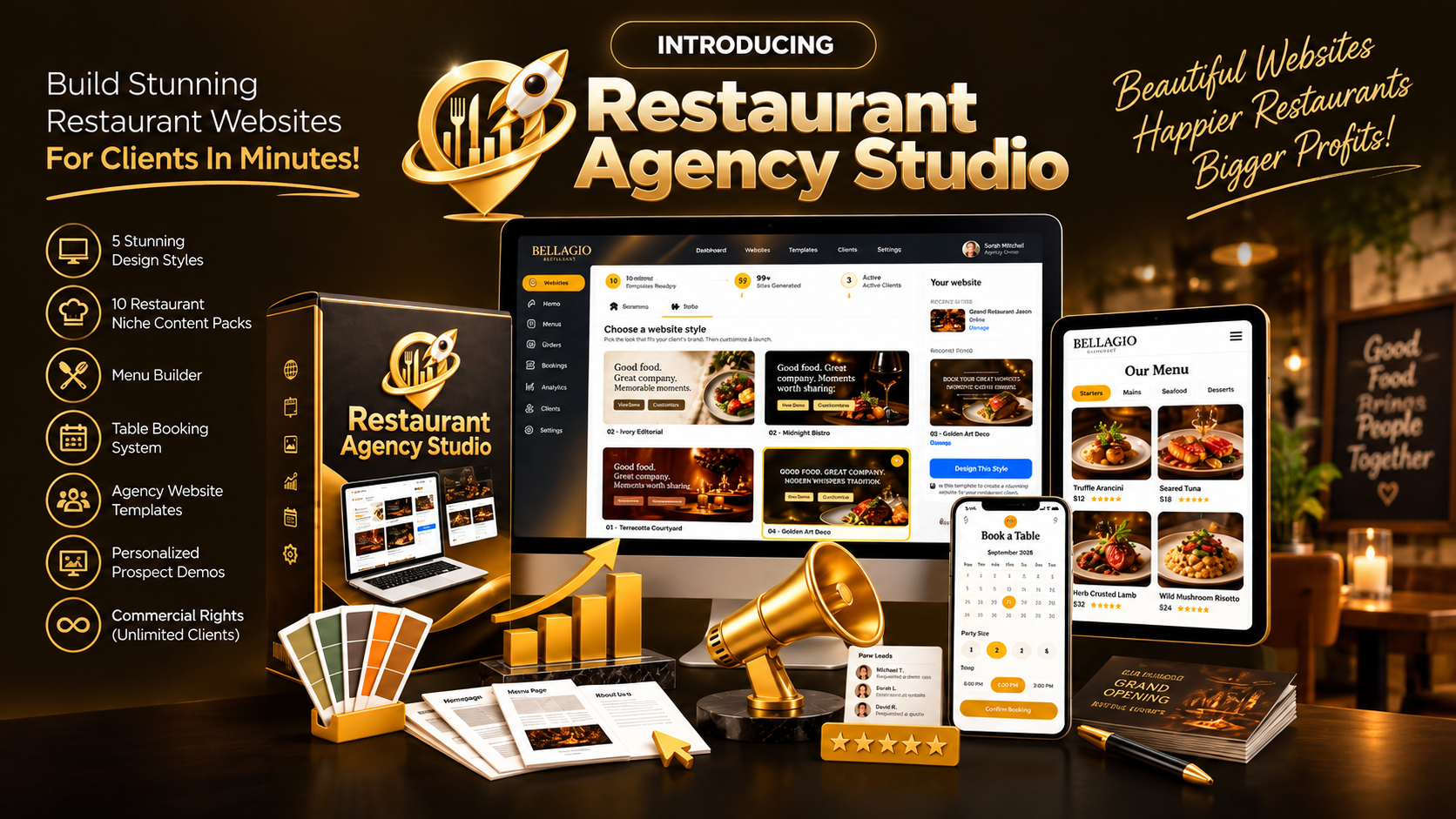
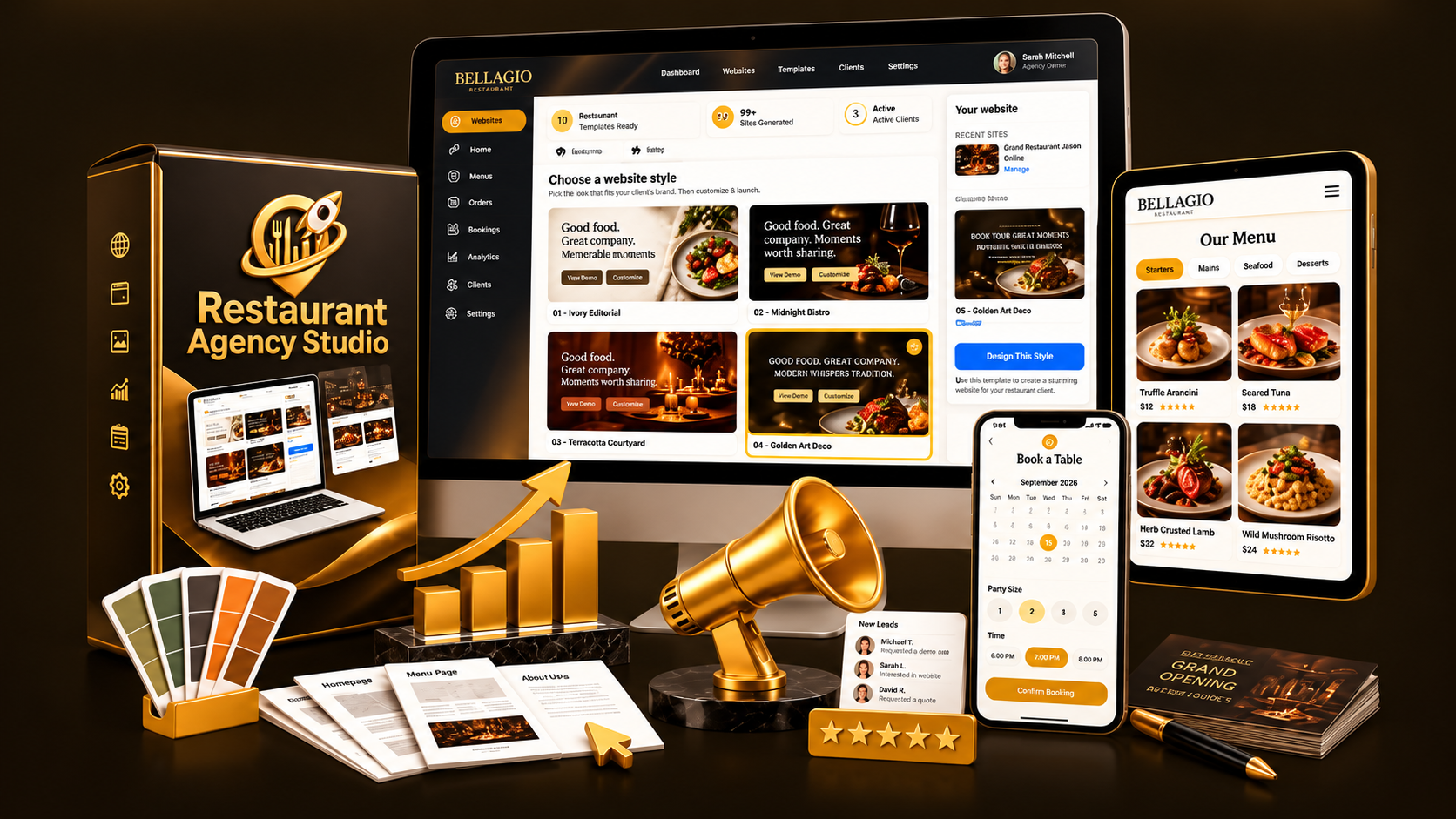
The front end gives you five design styles, ten restaurant niche content packs, a searchable menu builder, a photo gallery, a table booking form, an agency website with three styles, and personalized prospect demos. It also carries commercial rights for unlimited client sites.
Is it worth $27? For the right person, yes. For a lot of people who will buy it this week, probably not. This review explains exactly which group you fall into.
I am going to be blunt in places. I have written enough of these reviews to know that the launch-week hype around WarriorPlus products rarely matches what buyers actually experience in month two. If you want the polished marketing version, the sales page does that job well. This post is for the questions the sales page skips.
My Review Methodology (Read This Part, It Matters)
I want to be upfront about how this review was put together, because a lot of “reviews” for launch products are affiliate pages wearing a costume.
This review is based on the official sales page, the JV (joint venture) document supplied to affiliates, the vendor’s funnel breakdown, the demo video, and my own knowledge of how comparable WordPress agency products behave in the real world. I have not installed Restaurant Agency Studio on a live client site and run it through a full 90-day agency workflow. Nobody who publishes a review during launch week has, because the product went live on 15 September.
What I can do is read the documentation carefully, compare vendor claims against what the technology can realistically deliver, flag the inconsistencies I find, and tell you where the marketing language quietly does more work than the feature list.
Where I am confident, I will say so. Where I am guessing, I will say that too. Where the vendor’s own documents contradict each other, I will show you both versions and let you decide.
If you want a broader framework for judging these launches before you spend money, this digital products review guide for choosing the best online solutions covers the evaluation checklist I mentally run through on every product I look at. It is worth ten minutes of your time if you buy more than two or three of these a year.
I also want to acknowledge the obvious: reviews like this one can carry affiliate links, and mine sometimes do. That does not change what I write. It does mean you should read any review — including this one — with your own judgement switched on. Google’s own guidance on creating helpful, reliable content is a decent yardstick for whether a review page is serving you or serving the commission.
Affiliate Disclosure: This review may contain affiliate links. If you decide to purchase through one of them, we may earn a small commission at no extra cost to you.
Restaurant Agency Studio Review: Restaurant Agency Studio Product Snapshot
WordPress Restaurant Website Builder for Agencies & Local Marketers
Front-End Price: $27 One-Time | Early-Bird Discount: $2 Off
- Product Restaurant Agency Studio
- Vendor Dawn Vu
- Category Restaurant Agency Website Builder
- Front-End $27 One-Time
- Design Styles 5 at Front-End
- Restaurant Niches 10 at Front-End
- Coupon Code RESTAURANTSTUDIO
- Early-Bird Saving $2 Off
- Discounted FE $25 When Coupon Is Accepted
- Commercial Rights Client Website Use
- Booking Booking Request Form
- Money-Back Guarantee 30 Days
Use Coupon Code: RESTAURANTSTUDIO
Regular Front-End Price: $27 | With Coupon RESTAURANTSTUDIO: $25
Save $2 when the coupon is accepted at checkout.
Try Restaurant Agency Studio with the vendor’s advertised 30-day money-back guarantee.
Restaurant Agency Studio is presented as a WordPress-based website production system designed for agencies and local marketers serving restaurant clients. It combines restaurant-focused website styles, niche content, menu creation, galleries, booking request forms and prospect demo capabilities.
Front-End Offer:
The Front-End offer is available for $27 one-time. The Early-Bird coupon RESTAURANTSTUDIO is intended to provide an additional $2 discount when accepted at checkout.
Launch Information:
Vendor: Dawn Vu
Launch Date: 2026-Sep-15
Launch Time: 11:00 EDT
Front-End Price: $27 One-Time
Early-Bird Coupon: RESTAURANTSTUDIO for $2 Off
30-Day Money-Back Guarantee:
The vendor advertises a 30-day money-back guarantee. Buyers should review the current checkout and refund terms before purchasing.
Affiliate Disclosure:
This page contains an affiliate link. If you purchase Restaurant Agency Studio through the link on this page, I may earn a commission at no additional cost to you. This does not affect the information, analysis or opinions presented in my review.
Important:
Pricing, availability, features, package contents, promotional discounts and guarantee terms may change. Please review the current official sales page and checkout terms before purchasing. The RESTAURANTSTUDIO coupon provides the advertised $2 discount when accepted at checkout.
Restaurant Agency Studio Review: Who Created Restaurant Agency Studio?
Meet The Creator
The creator behind Restaurant Agency Studio

Dawn Vu is the creator behind Restaurant Agency Studio, a WordPress-based website production system designed for agencies, freelancers, and marketers serving restaurant and local food-service businesses. The platform focuses on simplifying the process of creating restaurant websites with niche-specific designs, menu functionality, galleries, booking request forms, and client-focused website presentation tools.
Restaurant Agency Studio Review: Sales & Demo Videos Of Restaurant Agency Studio
Watch the special launch presentation for Restaurant Agency Studio to learn more about the product, its agency-focused approach, and the launch offer available for restaurant website creation.
Explore the demonstration video to get a closer look at the website-building workflow, design approach, and agency-oriented features shown in the product ecosystem.
Restaurant Agency Studio Review: What Is Restaurant Agency Studio, Really?
Strip away the sales copy and Restaurant Agency Studio is three things bundled into one purchase.
Thing one: a website starter system. You upload a single onboarding plugin to a fresh WordPress install. The plugin then pulls in the core components, pages, posts, media, navigation, and site structure based on the design style and niche pack you choose. You are not manually importing demo content, hunting for the right theme settings, or rebuilding a menu layout from a blank canvas.
Thing two: a content library. The front end includes ten restaurant niche packs — American, Italian, Mexican, Pizza and Pizzeria, Catering, Coffee Shop and Café, Burger, Steakhouse, Seafood, and Sushi. Each pack ships with written pages, positioning copy, menu examples, calls to action, FAQs, and imagery appropriate to that cuisine. The claim is that you spend your time swapping in the client’s real story rather than writing every page yourself.
Thing three: a sales apparatus. This is the part that separates it from a theme bundle. You get your own agency website with three style options, a portfolio, an instant website quote estimator, and the ability to generate personalized demo pages for individual prospects. You can add a restaurant’s name, niche, address and phone, then show the owner a demo carrying their own details before you pitch.
That third piece is the actual differentiator. Anyone can sell you restaurant templates. The demo-generation angle is what the vendor is betting will convert.
Whether that bet pays off depends almost entirely on you, which is a point I will return to several times in this review.
Restaurant Agency Studio Review: The Problem Restaurant Agency Studio Claims To Solve
The sales page opens with a scenario that, credit where due, is genuinely true.
Pull up the website of any independent restaurant in your town on your phone. Odds are decent you will find a menu that is a JPEG image or a PDF download, opening hours buried three clicks deep, no visible booking path, and a layout that was last touched in 2019. The food might be excellent. The website is usually not.
That gap is real and it is large. The National Restaurant Association’s industry statistics put the US restaurant and foodservice sector above one million outlets with a 2026 sales forecast in the trillions. The sales page cites a $1.55T figure. Worth noting clearly: that is industry food sales, not website spending. Nobody is allocating a trillion dollars to WordPress sites. The number is atmosphere, not addressable market.
But the underlying observation holds. There are a lot of restaurants. Many have weak web presence. Some of them will pay for a better one.
The second half of the problem is the part agencies actually feel. Building a good restaurant site is not hard, it is repetitive. Theme, menu plugin, gallery plugin, booking form, contact details on six pages, mobile testing, plugin conflicts. Do that once and it is a fun project. Do it for the eighth client and you are losing a week per site to assembly work that generates no additional revenue.
Restaurant Agency Studio’s core promise is compression of that assembly step. Not magic. Compression.
Restaurant Agency Studio Review: How Restaurant Agency Studio Works – The Five-Step Workflow
The vendor documents describe a five-step process. I will walk through each one with my own commentary on what is realistic and what is optimistic.
Step 1: Install And Customize Your Agency Website
You start by setting up the agency site on your own WordPress hosting. You add your agency name, logo, colours, services, pricing, and the website designs you want to showcase.
The idea is that before a restaurant owner takes you seriously, they want to see what you can do. A generic Gmail address and a portfolio PDF is a weaker opening than a real agency site with live restaurant demos they can click into.
My take: this is sound reasoning and the inclusion is genuinely useful for beginners who have no agency presence at all. If you already run an established agency with a site you like, this component is redundant and you will skip it. That is fine, but it means roughly a third of what you paid for is dead weight for experienced buyers.
Step 2: Choose A Niche And Start Prospecting
Pick one of the included restaurant niches and start finding potential clients. The JV documentation mentions CSV upload for bulk demo page creation — you feed in prospect data and the system generates personalized demo pages carrying each business’s own name, niche, address and phone number.
My take: this is the most interesting feature in the whole product and also the one I would want to test hardest before relying on it. Bulk personalization at the demo level is a real advantage over sending a generic portfolio link. But “personalized” here means the business name, niche, and NAP details get swapped into a template. It does not mean the demo reflects their actual menu, their actual photos, or their actual brand.
A restaurant owner is not stupid. They will recognise a templated demo with their name pasted on it if you oversell it as “I built this for you.” Framed honestly — “here’s a direction I think would suit a place like yours” — it works well. Framed dishonestly, it damages trust in the first thirty seconds.
Step 3: Install One Plugin And Activate The Client Website
When a prospect becomes a client, you upload the onboarding plugin to their WordPress site, choose one of five styles and the appropriate niche pack, and the system installs components, pages, posts, content, media, navigation, and structure automatically.
My take: the “in minutes” framing in the sales copy is doing some heavy lifting. Plugin installation and content import can absolutely run in minutes on decent hosting. What does not run in minutes is DNS, SSL, hosting provisioning, client account access, email setup, and the inevitable back-and-forth about whether the client actually has their domain login.
Plan for the software step to be fast and the human step to be slow. That has been true of every agency tool I have reviewed.
Step 4: Customize The Business Information
Enter the client’s business name, phone, address and contact details once from the backend, and the data propagates across the site. Add their logo, adjust colours and fonts, replace images, configure the quote system.
My take: centralized business settings are genuinely valuable and underrated. The most annoying part of maintaining local business sites is that opening hours change and now you are hunting through eight pages. A single source of truth for NAP data solves a real maintenance headache and makes ongoing care retainers less painful.
This also matters for local search. Consistent name, address and phone data across your site and directory listings is a long-standing signal in local SEO ranking factors, and it pairs directly with the client’s Google Business Profile setup. If you are selling restaurant websites, that pairing is your natural upsell.
Step 5: Deliver, Get Paid, Repeat
The finished site ships mobile optimized with SEO, AEO, GEO, FAQ, LLM.txt, accessibility and lead-generation foundations in place. You deliver, charge your rate, and repeat.
My take: “foundations in place” is accurate and appropriately modest. A well-structured WordPress site with clean markup, FAQs and internal linking is a good starting point. It is not a ranking strategy. Nobody ranks a new restaurant site in a competitive city because the theme has good heading structure.
I will cover the SEO claims in detail further down, because there are a few terms in that list that deserve scrutiny.
Restaurant Agency Studio Review: Deep Dive: What You Actually Get In The Front End Of Restaurant Agency Studio
This is the section most reviews skip or turn into a bullet dump. I want to go through each component properly, because the difference between “included” and “useful” is where these products live or die.
The Five Design Styles
The front end includes five named styles: Ivory Editorial, Midnight Brass, Terracotta Courtyard, Golden Art Deco, and Peach Social.
The naming is doing marketing work, but the underlying logic is reasonable. A neighbourhood coffee shop and a high-end steakhouse should not look like the same website, and offering visually distinct directions means you can match the design to the prospect rather than showing everyone the same layout in a different colour.
From the previews shown on the sales page, the styles cover a decent spread: clean editorial, dark and upscale, warm and rustic, art deco and formal, soft and social-media friendly. That is a sensible range for restaurant work specifically.
What to watch for: five styles sounds like five websites, but in practice a style is a design system — typography, colour treatment, section layouts, hero patterns. The page structures underneath are likely to be similar across all five. That is normal and not a criticism, but if you are picturing five completely different site architectures, adjust your expectation.
The honest limitation: if you deliver ten restaurant sites in the same city using five styles, some of your clients will end up with visibly related websites. The vendor’s answer is the branding layer — different logos, colours, images and copy. That does genuinely disguise a lot. It does not disguise everything.
The Ten Niche Content Packs
The included niches are American, Italian, Mexican, Pizza and Pizzeria, Catering Service, Coffee Shop and Café, Burger, Steakhouse, Seafood, and Sushi.
Each pack is described as containing relevant positioning, pages, menu examples, calls to action, FAQs and imagery for that specific type of business.
This is the component I rate most highly in the front end, and the reason is unglamorous: writing restaurant website copy is boring and most agency owners are bad at it. Having a competent starting draft for “About Us” on an Italian restaurant, or a services structure for a catering business, saves hours of staring at an empty page.
The realistic caveat: done-for-you copy is starting copy. If you hand a client the pack text with only the business name changed, you are delivering a website that says nothing specific about their restaurant. The owner’s actual story — who started the place, what the signature dish is, why they source from a particular supplier — is what makes a restaurant site convert. No niche pack contains that.
Budget an hour or two per client for an interview and a rewrite. That hour is what separates a $500 website from a $2,500 website.
Coverage assessment: ten niches covers a solid chunk of the independent restaurant market but leaves obvious gaps. No Chinese, Indian, Thai, Korean, Vietnamese, BBQ, bakery, food truck, brunch, bar and grill, or vegan options in the front end. Those are all in OTO1, which is a $47 upsell. That is a deliberate funnel design and you should assume you will want it if you plan to work this niche seriously.
The 50 Combinations Claim
Five styles times ten niches equals fifty starting combinations. The maths is correct and the framing is standard launch-product inflation.
Fifty is not fifty unique websites. It is five looks applied to ten content sets. Useful? Yes, genuinely — it means you can serve three Italian restaurants in the same metro without them getting identical sites. Should you treat “50 combinations” as fifty distinct products? No.
I mention this because these multiplication claims show up in almost every WarriorPlus launch and they train buyers to expect more variety than they receive. I flagged the same pattern in my ViralRobot AI review, where the template maths worked the same way. It is not dishonest, it is just optimistic accounting.
The Searchable Menu Builder
This is the feature that makes the product restaurant-specific rather than a generic local business template, and it deserves attention.
You build a structured food and drink menu inside WordPress. The frontend then presents it with dish and ingredient search, category browsing from starters through mains to desserts, and a house-favourites filter for signature items.
Why this matters more than it sounds: the single most common failure on independent restaurant websites is the menu as an image or a PDF. It is unreadable on mobile, invisible to search engines, inaccessible to screen readers, and impossible to update without a designer. Replacing that with a structured, searchable menu is a legitimate, demonstrable improvement you can point to in a sales conversation.
It is also the easiest thing in the world to demo. Open the owner’s current site, try to read the menu on a phone, then open your demo and search for a dish. The comparison sells itself.
What I would verify: whether the menu output includes proper structured data. Google supports structured data for local businesses and menus, and a menu marked up with schema.org Restaurant and Menu types has a shot at enhanced search presentation. The vendor documentation mentions SEO structure broadly but I did not find an explicit schema claim for menu items. If you buy, check this early — it is the difference between a nice menu and a menu that earns visibility.
The Photo Gallery
A dedicated gallery for the dining room, team, atmosphere, events, catering and signature dishes, with sample imagery you replace with the client’s own photos.
Straightforward feature, sensibly included. Restaurants are a visual business and a gallery is table stakes.
The practical problem nobody mentions: most independent restaurants do not have good photos. They have phone snaps in bad lighting and a few images from a food blogger who visited in 2021. Your gallery will only look as good as the images you are handed.
This is actually an opportunity. Offering a basic photo session as an add-on, or coordinating one with a local photographer, is a legitimate revenue line and it makes your websites look dramatically better in your own portfolio. Build that into your pricing.
Table Booking With Daily Limits
You get a booking request form with a configurable daily booking-capacity limit. Alternatively, you can bypass the built-in flow entirely and point guests to an external reservation service such as OpenTable.
The dual approach is the right call. Small independents with no reservation system get a working request form. Established restaurants already on a booking platform get a clean link rather than a competing system that fragments their reservations.
Important expectation setting: this is a booking request form, not a real-time reservation engine. It does not check live table availability, manage floor plans, handle deposits, send SMS confirmations, or sync with a POS. The daily limit is a cap on requests, not a capacity management system.
For a twenty-cover neighbourhood bistro taking bookings by phone, a request form is a genuine upgrade. For a busy restaurant doing two hundred covers a night, it is not adequate and you should be recommending a proper platform instead. Know the difference before you pitch, because promising reservation functionality you cannot deliver is how agency relationships end badly.
Central Business Settings
Enter the restaurant’s name, logo, address, contact details and opening hours once, and the information applies site-wide.
I covered this in the workflow section and I will repeat the point because it is undersold in the marketing: this is the feature that makes ongoing maintenance retainers profitable. If a holiday hours change takes you ninety seconds instead of fifteen minutes across eight pages, a $100/month care plan actually makes sense for you.
Native WordPress Block Editing
No Divi, no Elementor Pro, no separate commercial theme licence required. You customize using native WordPress blocks.
This is a meaningful cost and compatibility decision, and I think it is the right one. Building on the native block editor means no recurring builder licence, no builder lock-in on client sites, better long-term compatibility with WordPress core updates, and generally lighter front-end output than heavy page builders produce.
The tradeoff: the block editor is less forgiving than a drag-and-drop builder for freeform layout work. If you have spent five years in Elementor and expect the same level of visual control, there is an adjustment period. For most restaurant sites — which are structurally simple — this is not a real constraint.
Speed matters here more than people think. Restaurant traffic skews heavily mobile, often on cellular connections, frequently from someone standing outside deciding where to eat. A lighter block-based build has a real advantage over a builder-heavy one. Run every site you deliver through PageSpeed Insights before handover and you will have a legitimate performance number to show the client.
Your Agency Website And Instant Quote Estimator
Three agency styles, a portfolio, restaurant demos embedded in that portfolio, and an “Instant Website Quote” tool that lets prospects explore your service scope before they talk to you.
The quote estimator is an interesting inclusion. Used well, it filters tyre-kickers and anchors price expectations before the first call. Used badly, it prices you into a corner before you understand the project.
My recommendation: set your quote ranges deliberately high and treat the tool as qualification, not as a binding proposal. A restaurant owner who bounces at your estimator range was never going to pay your rate anyway, and you just saved a phone call.
Personalized Prospect Demos
The headline feature. Create a demo carrying a specific restaurant’s business details, hosted on your agency site, and share the link as part of your outreach.
I covered the honesty caveat above and I will add the operational one: this only works if you do the prospecting. The tool creates demos. It does not find restaurants, write your outreach email, handle objections, or follow up four times when the owner is busy during service.
If you are not prepared to do cold outreach — walking in during the quiet hour between lunch and dinner, emailing, calling, following up — the demo generator is an unused feature. That is not a flaw in the product. It is the part of the business the product cannot do for you.
If outreach is where you struggle, the affiliate and digital marketing tutorials section covers outreach sequencing and follow-up frameworks that transfer directly to local client acquisition.
SEO, AEO, GEO, LLM.txt And Accessibility Claims
The JV documentation lists these together, so let me separate them honestly.
SEO structure: clean heading hierarchy, internal linking, FAQ sections, sensible URL structure. Real and useful. Table stakes for a modern build.
Accessibility-focused functionality: worth having, worth verifying. Accessibility is a legal exposure area for public-facing business sites in several jurisdictions. “Focused” is not the same as “compliant” and you should not tell a client the site is WCAG-conformant unless you have actually audited it.
AEO (Answer Engine Optimization) and GEO (Generative Engine Optimization): these are current industry buzzwords for structuring content so AI assistants and answer engines can cite it. The underlying practice — clear question-and-answer formatting, structured data, unambiguous factual statements — is legitimate and genuinely useful. The acronyms are newer than the practice.
LLM.txt generation: this is a proposed convention for telling large language models how to read your site. It is not an established standard, it is not honoured by major AI systems in any guaranteed way, and it is not a ranking factor. It costs nothing to include and might matter later. It is not a reason to buy.
I would rank these claims: SEO structure is real value, accessibility needs verification, AEO/GEO is reasonable practice with trendy naming, and LLM.txt is speculative. Sell accordingly. Promising a restaurant owner that their site is “AI-optimized” is the kind of claim that is hard to defend when they ask what it did for them.
Restaurant Agency Studio Review: Key Features Summary Of Restaurant Agency Studio
Restaurant Agency Studio Review: The Full Funnel Breakdown Of Restaurant Agency Studio – What The $27 Actually Becomes
- Core WordPress-based restaurant website production system
- 5 included restaurant website design styles
- 10 restaurant niche packs
- Up to 50 style-and-niche combinations
- Searchable restaurant menu builder
- Restaurant photo gallery functionality
- Table booking request form
- Agency website with 3 design styles
- Personalized prospect demo functionality
- Commercial rights for client website projects
- No monthly software subscription for the front-end purchase
- Designed to help create restaurant prospecting messages
- Useful for outreach campaigns targeting restaurant owners
- Can complement the personalized demo workflow
- Optional purchase for users actively prospecting for clients
- Adds 5 additional premium website styles
- Adds 20 additional restaurant niche packs
- Expands the library to 10 styles and 30 niches
- Provides up to 300 style-and-niche combinations
- Includes Agency Pro capabilities
- Includes tools for bulk prospecting
- Supports AI-written SEO articles for agency promotion
- Includes scheduled article creation and publishing features
- Designed for creating restaurant promotion and marketing materials
- Can support promotional campaigns for restaurant clients
- Useful as an additional agency service asset
- Optional add-on rather than a requirement for the core system
- Helps create restaurant website copy
- Supports AI-assisted image creation
- Adds an AI chatbot capability
- Supports booking and catering enquiries
- Helps organize structured restaurant knowledge
- Provides restaurant SEO article drafting capabilities
- Requires your own supported AI provider/API setup
- AI provider usage costs are separate from the upgrade price
- Designed to help create agency client documents
- Useful for organizing client-facing materials
- Can complement the restaurant website delivery workflow
- Optional purchase for agencies that need additional documentation tools
- Provides planned restaurant niche additions over 12 months
- Adds approximately 2 to 3 niche packs each month
- Adds a new website style approximately every two months
- Designed for agencies wanting to expand their restaurant market coverage
- Future-delivery schedule means the complete library is not available immediately
- Managed WordPress hosting option for the system and client websites
- Designed for users who prefer managed technical infrastructure
- Can reduce the need to manage hosting independently
- Annual recurring cost rather than a one-time software purchase
- Consider whether the hosting economics fit your agency model before purchasing
- Expands the agency model beyond restaurants into home-service businesses
- Useful for agencies planning to serve multiple local-business verticals
- Provides a separate home-service agency website system
- Best suited to marketers who want a second local-business niche
- Additional local-marketing-focused AI bundle
- Designed for marketers wanting broader local-business marketing capabilities
- Separate from the core Restaurant Agency Studio front-end
- Best considered only if the additional tools fit your existing agency workflow
Use the early-bird coupon below at checkout to reduce the $27 front-end price to $25 when the coupon is accepted.
Restaurant Agency Studio comes with a 30-day money-back guarantee, giving you an opportunity to evaluate the product and decide whether it fits your website agency workflow.
Affiliate Disclosure: This section contains affiliate links. If you purchase Restaurant Agency Studio through my link, I may earn a commission at no additional cost to you. My assessment is based on the available product information, vendor materials, pricing details, and my independent evaluation. Pricing, bonuses, features, and upgrade availability may change.
Restaurant Agency Studio Review: Pricing Analysis – What $27 Actually Buys
Let me do the honest maths.
If you buy only the front end at $27 (or $25 with the coupon): you get a working restaurant website system with ten niches, five styles, a menu builder, gallery, booking, an agency site and demo generation, with commercial rights for unlimited client sites. You supply your own hosting and domains.
That is a lot of functionality for $27. Genuinely. Comparable individual components — a quality restaurant theme, a menu plugin, a booking plugin, a gallery plugin — would run $150 to $300 in annual licences from established developers, and would not include the content packs or the agency layer.
The value case is strong at the front end. I want to say that clearly, because the rest of this review contains enough criticism that it could read as negative overall. It is not. The FE is well-priced.
The realistic entry price is $74 (FE plus OTO1), because the niche coverage in the front end has real gaps.
The honest full cost of running this as a business includes hosting (budget $10–30/month minimum for client sites, more if you host multiple), domains, your time, and possibly an AI provider subscription if you take OTO2.
What About The $97 “Regular Price”?
The sales page anchors against a $97 regular price. Treat launch-week anchor pricing in this marketplace with appropriate scepticism. Whether the product ever sells at $97 for a meaningful period after launch is unknowable today, and the pattern across similar launches is that post-launch pricing tends to settle well below the anchor.
This does not make $27 a bad deal. It makes the “save $70” framing marketing rather than information.
Restaurant Agency Studio Review: The Inconsistencies I Found In The Official Documents
I read the JV document and the sales page side by side. Here are the discrepancies. I am including these because a review that finds zero problems in a launch product is not a review.
1. The Commission Ceiling Contradicts Itself
The affiliate-facing JV page advertises “up to $500 per customer.” The JV document header states “up to $430.8/customer.”
Both cannot be right. The $500 figure appears to require the $497 hosting tier at 20% ($99.40) plus every software offer and all three bumps. The $430.80 figure is presumably calculated on the lower hosting tier.
This matters to affiliates, not to buyers. But it tells you the documents were assembled quickly, which is worth knowing when you are assessing how carefully the rest was checked.
2. OTO2 Is Named Inconsistently
The JV document calls OTO2 “Pro Home Restaurant Addon.” The JV page calls it “Restaurant Agency Studio Pro Addon.”
“Pro Home Restaurant” is almost certainly a copy-paste artifact from the Home Service Agency Studio funnel that was not fully updated. Minor, but revealing.
3. The Demo Video Shows A Different Product
This is the one I would want addressed before buying.
Both the JV page and the sales page state, in their own words, that the walkthrough video demonstrates the Home Service Studio workflow — agency overview, prospect demos, guided setup, style and niche selection, business profile, design settings. The sales page adds a note that some tools shown belong to optional upgrades, and that Restaurant front-end features including menus, galleries and booking are detailed further down the page in text.
So the video you watch before buying a restaurant product is a demonstration of a different product in a different industry, with some features shown that are not in the front end.
Why this concerns me: the restaurant-specific features — the searchable menu builder, the gallery, the booking form — are the entire reason this product exists as a separate purchase. Those are exactly the features not shown in motion. You are asked to evaluate them from screenshots and copy.
The charitable reading is that the two Studios share a common core and the vendor reused the walkthrough to save production time on a tight launch schedule. That is plausible and probably accurate.
The buyer’s reading should still be: I have not seen the menu builder actually work. Test it in the first week and use the 30-day guarantee if it does not do what the page describes.
4. “Unlimited” Has An Asterisk
Unlimited client sites is a software licence term. It does not include unlimited hosting, and the sales page says so. Each client site requires its own WordPress installation on its own hosting.
This is normal and correctly disclosed. I flag it because “unlimited” in launch copy consistently causes buyers to assume more than is offered.
5. Industry Statistics Are Context, Not Proof
The $1.55T industry forecast and 1M+ outlet figures describe restaurant food sales. The WebFX and Fiverr pricing screenshots show published third-party service rates, checked 8 September 2026.
To the vendor’s credit, the sales page explicitly labels both as illustrative and not as proof of earnings. That disclosure is better than most launches manage. But the visual effect of stacking big numbers next to a $27 price is doing persuasion work regardless of the footnote.
6. The Revenue Calculator Is A Persuasion Device
The sales page includes an interactive calculator projecting monthly and yearly revenue from selected services and client volume. The default scenario shows $4,600/month and $55,200/year from two new clients monthly.
The page discloses that this is gross revenue before labour, hosting, tools, refunds, overhead and tax, and that it is not profit. Again, better disclosure than average.
But closing two new website clients every single month, indefinitely, is a serious sales operation. Most solo freelancers do not hit that consistently. The calculator lets you input a number that feels achievable and then multiplies it by twelve, which is a well-understood psychological mechanism.
Use it to model pricing scenarios. Do not use it as a forecast.
Restaurant Agency Studio Review: Advantages And Disadvantages Of Restaurant Agency Studio- The Balanced View
What Restaurant Agency Studio Genuinely Does Well
The front-end price-to-feature ratio is strong. At $27, the component value alone justifies the purchase for anyone working in this space.
It is restaurant-specific in ways that matter. The searchable menu builder is not a generic feature with a restaurant label on it. It addresses the most common, most visible failure on independent restaurant websites, and it demos brilliantly.
No page builder dependency. Native WordPress blocks means no recurring builder licence, no lock-in on client sites, lighter output and better long-term update compatibility. This is a genuinely good architectural decision that saves you money every year.
Centralized business data. Underrated. It is the feature that makes maintenance retainers profitable rather than tedious.
The demo generation concept is sound. Showing an owner a website direction with their own business details attached is a materially better opening than a generic portfolio link.
Disclosure quality is above average for the category. The sales page labels its statistics, footnotes its calculator, and explicitly states that hosting is not unlimited and that AI features require your own provider. Many launches in this marketplace do not bother.
One-time payment with commercial rights. No recurring fee for the core system, unlimited client delivery. That is the right licensing model for agency work.
Where It Falls Short
Front-end niche coverage has real gaps. Ten niches sounds generous until you notice Chinese, Indian, Thai, Korean, bakery, food truck and brunch are all behind a $47 upsell.
The demo video does not show the product. Evaluating restaurant-specific features from screenshots is not ideal for a purchase decision, even at $27.
The expansion pass is a promise. $97 for twelve months of future releases, from a small vendor, in a marketplace where that model frequently underdelivers.
Hosting upsell is overpriced and structurally mismatched. One or two sites of hosting inside a product built around unlimited client sites.
“Fifty combinations” is inflated framing. It is five looks on ten content sets, which is useful but not fifty products.
The booking system is basic. A request form with a daily cap is not a reservation platform, and you need to be clear about that with clients.
It does not solve your actual bottleneck. Every agency owner I have ever spoken to is bottlenecked on sales, not on production. This product compresses production. Production was not the hard part.
Launch-week urgency is artificial. A four-day window with countdown timers exists to compress your decision, not to serve you. I noted the same structural pressure in my SEnuke AI review and my view has not changed: if a product is only worth buying inside a 96-hour window, it was not worth buying.
Restaurant Agency Studio Review: Pros & Cons Summary Of Restaurant Agency Studio
Pros
Cons
Restaurant Agency Studio Review: Who Should Buy Restaurant Agency Studio
I would rather send the wrong person away than take a commission on a purchase they regret. Here is my honest segmentation.
Buy It If You Are…
A local marketer or freelancer who already talks to small business owners. You have the hard skill — starting conversations with people who own businesses. What you lack is a fast, repeatable production system. This fills that gap well and $27 is a rounding error against a single project fee.
A web designer drowning in per-project assembly time. If you build local business sites and every project starts with theme selection and plugin assembly, the time saved on your next two restaurant projects exceeds the price by an enormous margin.
An agency owner wanting to add a restaurant vertical. Verticalizing is a legitimate growth strategy. Specialists command higher fees than generalists, and “we build restaurant websites” is an easier introduction than “we build websites.”
A hosting or maintenance provider looking for a front-end offer. If you already sell care plans, a website build is the natural entry product, and restaurants generate recurring work through menu changes and seasonal promotions.
A capable beginner willing to do outreach. If you can install WordPress, follow a guided setup, and walk into a restaurant during the quiet afternoon hours to have a conversation, this gives you a credible product to sell. The constraint is the conversation, not the software.
Do Not Buy It If You Are…
Looking for passive income. This is a client services business. You will do sales calls, revisions, scope negotiations and support. The vendor’s own disclaimer states clearly that this is not a passive income scheme. Believe it.
Unwilling or unable to prospect. The demo generator is worthless without outreach. If cold contact makes you physically uncomfortable and you have no plan to overcome that, the software will sit unused like the last four things you bought.
Expecting a hosted SaaS. This is self-hosted WordPress. You need hosting, domains, and basic competence with installs, DNS and SSL. If that sentence made you uneasy, factor in a learning curve.
Already tooled up with a production system you like. If you have a refined Elementor or Bricks workflow with your own component library, switching to a block-based system for restaurant projects may cost more in disruption than it saves.
Needing real reservation management. If your target clients need live availability, floor plans, deposits and POS integration, this booking form does not cover it. Sell them a website and recommend a dedicated platform.
Buying primarily for the AI features. They are in OTO2, they need your own AI provider, and they are the least differentiated part of the offer. There are better dedicated tools if AI content is your priority — I compared several in my Igloo App AI review, and the standalone options generally outperform bundled AI layers.
Restaurant Agency Studio Review: How Restaurant Agency Studio Compares To The Alternatives
Restaurant Agency Studio vs. Alternatives
A practical comparison of Restaurant Agency Studio with other website-building approaches for agencies serving restaurant and local-business clients.
| Platform / Approach | Starting Cost | Restaurant Focus | Agency / Client Use | Key Advantage | Main Limitation |
|---|---|---|---|---|---|
|
Restaurant Agency Studio
BEST FOR RESTAURANT AGENCIES |
$27 FE |
High Restaurant-specific website styles, niches, menu builder, gallery and booking request form. |
Strong Commercial rights and prospect-demo workflow. |
Purpose-built workflow for agencies creating restaurant websites. | Front-end design library is limited compared with large general-purpose ecosystems. |
| Elementor Pro | Paid subscription |
Medium Restaurant sites can be created using templates and third-party integrations. |
Strong Widely used for professional WordPress client websites. |
Extensive design freedom and a large WordPress ecosystem. | More hands-on setup, design and plugin selection may be required. |
| Wix | Subscription-based |
Medium Restaurant-oriented website functionality is available. |
Medium Suitable for creating and managing client websites, depending on the agency workflow. |
Hosted platform with an accessible visual website-building experience. | Less WordPress-centric control and ongoing subscription costs. |
| Squarespace | Subscription-based |
Medium Good fit for visually focused restaurant and hospitality websites. |
Medium Useful for smaller client projects and managed website services. |
Polished templates and relatively simple website management. | Less flexibility than a self-hosted WordPress production workflow. |
| Duda | Subscription-based |
Medium Restaurant sites can be produced using flexible templates and components. |
Very Strong Designed with agencies and multi-site management in mind. |
Strong agency-oriented workflow and client management capabilities. | Higher recurring platform costs can make it less attractive for very small projects. |
| Premium WordPress Restaurant Theme | Usually one-time + optional extras |
High Many themes are specifically designed for restaurants. |
Medium Depends heavily on the theme license and agency workflow. |
Attractive restaurant-focused designs with WordPress flexibility. | Quality, updates, support and licensing vary considerably between themes. |
| Build Your Own Agency System | Variable |
Potentially High You control the exact restaurant features and templates. |
Very Strong Can be designed specifically around your agency’s processes. |
Maximum control over technology, branding and workflow. | Requires substantially more development time, maintenance and technical expertise. |
Restaurant Agency Studio Review: Can You Actually Make Money Selling Restaurant Websites?
This is the question underneath every other question, so let me address it properly rather than waving at the revenue calculator.
The Honest Market Reality
Restaurants are a difficult client category. I want to say this plainly because launch pages never do.
Restaurant margins are thin, typically in the low single digits for independents. Owners work brutal hours and are chronically time-poor. Decision-making is often reactive. Failure rates in the first three to five years are high. Payment collection can be slower than in other local verticals.
None of that makes restaurants a bad niche. It makes them a niche that requires realistic pricing and disciplined qualification.
What restaurants have going for them: there are an enormous number of them, they are physically easy to visit, they have obvious visible website problems, they change their offerings constantly (which creates recurring work), and they talk to each other. Restaurant owners in a city know other restaurant owners. Referral velocity in this niche is genuinely good once you land two or three clients.
Realistic Pricing Guidance
The sales page cites WebFX ranges of $1,000–$30,000+ for web design and a Fiverr Pro listing at $1,500 for a five-page WordPress site. Those are real published prices, but they are not restaurant-specific.
Here is my more grounded view for independent restaurant work:
| Service | Realistic range | Notes |
|---|---|---|
| Basic restaurant site | $600–$1,200 | Single location, menu, gallery, booking |
| Standard build | $1,200–$2,500 | Custom photography coordination, real copy, local SEO setup |
| Multi-location or premium | $2,500–$6,000 | Multiple locations, catering pages, deeper SEO |
| Menu update retainer | $50–$150/month | Seasonal changes, specials |
| Care plan with hosting | $100–$300/month | Updates, backups, security, small changes |
| Local SEO | $300–$1,000/month | Realistic for independents, below the WebFX range |
The retainer lines matter more than the build fee. A $1,500 site is a one-time event. Ten clients at $150/month is $18,000 a year that arrives whether or not you close anything new.
This is where restaurants genuinely shine as a vertical: menus change, seasons change, holidays require hours updates, and promotions recur. Recurring work is baked into the business.
The Sales Process That Actually Works Here
Based on what works in local services generally, here is the sequence I would run with this tool:
Pick one niche and one neighbourhood. Not “restaurants.” Italian restaurants in one district. Specificity makes your outreach credible and your demo relevant.
Audit ten prospects properly. Open their sites on a phone. Note what is broken — menu as an image, no mobile responsiveness, no booking path, missing hours, slow load.
Build one strong demo, not ten weak ones. The bulk CSV demo generation is tempting. Resist it initially. A single carefully prepared demo for a prospect you have actually researched converts far better than fifty generic ones.
Visit in person between 2pm and 4pm. This is the single highest-leverage tactic in restaurant sales and almost nobody does it. Lunch service is over, dinner prep has not consumed everything, and the owner is often on site. Ask for two minutes. Show the demo on a tablet.
Lead with the specific problem, not the product. “I noticed your menu is a PDF and it’s hard to read on a phone — here’s what it could look like” beats any pitch about styles and niche packs.
Price the first client low to get a portfolio piece and a testimonial. Then raise your price.
Follow up four times. Restaurant owners are not ignoring you, they are busy. Most freelancers quit after one email. The follow-up discipline is where the money is, and the frameworks in these affiliate marketing and outreach tutorials transfer directly to local client work.
How Long Until You Break Even?
At $27, you break even on your first client at literally any price point.
At $74 (FE + OTO1), same answer.
At the full funnel of roughly $1,346, you need one solid mid-range project. Achievable, but you should reach that spend after you have sold something, not before.
The realistic honest timeline for a beginner doing consistent outreach: first client somewhere in weeks four to twelve. For someone with an existing local client base: potentially within two weeks, because you are selling to warm relationships.
Anyone telling you differently is selling something.
Restaurant Agency Studio Review: A Practical 30/60/90 Day Plan If You Buy Restaurant Agency Studio
If you purchase this, here is how I would actually use it. Products fail more often from lack of a plan than from lack of features.
Days 1–7: Verify Before The Refund Window Closes
Install the plugin on a test site. Do not touch client work yet.
Run every front-end feature the sales page promised. Build a full menu with twenty items and test search and filtering on an actual phone. Test the booking form, set a daily limit, and confirm it behaves. Upload gallery images. Change business settings and verify the data propagates site-wide.
Check page speed on a real device. Check whether menu items output structured data. Check accessibility basics with a free audit tool.
This week exists because of the demo video issue. You are verifying the restaurant-specific features you could not see in motion before purchase. If any of them fall short of the page’s description, you are inside the 30-day guarantee and you should use it without hesitation.
Days 8–30: Build Your Agency Presence And One Real Demo
Set up your agency site properly. Real business name, real contact details, working portfolio.
Build two complete sample restaurant sites — pick two different niches and two different styles — and treat them as portfolio pieces. Use good stock photography. Write real copy, not pack copy. These are what prospects will judge you on.
Then research ten local restaurants and build one genuinely good personalized demo for the best prospect on that list.
Days 31–60: Outreach
Contact all ten prospects. Walk in during afternoon hours where you can. Show the demo. Follow up four times.
Track everything: who you contacted, when, what response, next action. Ten prospects is too few statistically; the purpose is to learn your pitch, not to close ten deals. Expect one or two conversations and possibly one client.
Adjust your angle based on what people actually object to. Restaurant owners will tell you exactly what they care about if you let them talk.
Days 61–90: Deliver, Then Systemize
Deliver your first client site properly. Over-deliver slightly. Ask for a testimonial and two referrals on handover day, not later.
Document your own process while it is fresh — what took longest, what you forgot, what the client asked for that the packs did not cover. That document is worth more to your business than any upsell in the funnel.
Then decide about OTO1. By day 90 you will know from real conversations which niches you actually need.
Restaurant Agency Studio Review: Technical Requirements And Practical Considerations Of Restaurant Agency Studio
What you need: WordPress hosting, a domain per site, PHP and MySQL versions meeting current WordPress requirements, and the ability to install plugins and manage DNS and SSL.
Hosting quality matters more than usual here. Restaurant traffic is mobile-heavy and often arrives at decision moments — someone standing on a street deciding where to eat. A slow site loses that visitor to the restaurant next door. Budget shared hosting at $3/month will undermine everything else you do. Spend $10–25/month per client site and build it into your pricing.
Client site ownership. Decide your policy before your first sale. Do you build on your hosting and charge a care plan, or on the client’s hosting and hand over full control? Both are legitimate. Having no policy is what causes disputes.
Backups and maintenance. The vendor provides ongoing maintenance for the included core theme and plugins. You are responsible for the site itself — backups, updates, security, uptime. The disclaimer is explicit that the vendor is not responsible for downtime, plugin conflicts, server misconfiguration or hosting issues.
Content and legal responsibility sits with you. The vendor’s terms state clearly that you are responsible for reviewing, editing, approving and publishing all website copy, images, service information, pricing, quote settings, demos and completed client sites, including compliance with applicable laws, privacy practices and advertising rules.
That last point deserves emphasis for personalized demos specifically. Creating a demo page featuring a real business’s name and address, hosted on your domain, without their permission, occupies genuinely grey territory around trademark and business identity. Keep demos unlisted, do not index them, remove them after the pitch, and never present a demo in a way that could be mistaken for the restaurant’s official site.
Data privacy. A booking form collects personal data. If you serve clients in Europe, the UK, California or similar jurisdictions, that triggers obligations around consent, storage, retention and privacy policies. The vendor recommends consulting a legal professional, and that is genuinely the right advice rather than boilerplate.
Restaurant Agency Studio Review: Vendor Background And Support Of Restaurant Agency Studio
Dawn Vu operates under DFYFortune.com and states a twelve-year track record in the space. The JV page displays a WarriorPlus vendor profile with follower count, sales history, badges and rating.
Support runs through dfyfortune.com/support, with direct contact available via email, Facebook and Skype/Teams. Personal email support is listed as a front-end inclusion.
What I can assess: the documentation is reasonably thorough, the disclosure quality is above average for this marketplace, and the product exists within an ecosystem — Home Service Agency Studio, Local Alchemist AI — that suggests ongoing development rather than a one-off launch.
What I cannot assess: actual support responsiveness after the launch window, long-term update cadence, and whether the Expansion Pass roadmap gets delivered. These are the things that only become knowable in month six, and no launch-week review can tell you.
What you can do: check the vendor’s WarriorPlus profile yourself before buying. Refund rates and vendor ratings are visible on the platform and they are more informative than any review, including this one.
Restaurant Agency Studio Review: Common Mistakes Buyers Make With Products Like Restaurant Agency Studio
I have reviewed enough launches to see the same failure patterns repeat. If you buy, avoid these.
Mistake 1: Buying the full funnel before selling anything. The upsell sequence is designed to be taken in one session while your enthusiasm is highest. Enthusiasm is not validation. Buy the front end, use it for thirty days, then decide.
Mistake 2: Building twelve demos before making one phone call. Demo creation feels like progress. It is not progress. A prospect conversation is progress. The tool makes the easy part faster and leaves the hard part untouched.
Mistake 3: Delivering pack content with only the name changed. The niche packs are a draft. A restaurant website that does not mention the owner’s name, the signature dish, or why the place exists will not convert the restaurant’s customers, and the owner will notice within a month.
Mistake 4: Competing on price. If you pitch a $300 website because the tool made it fast, you will attract clients who treat you as a commodity and revise you into the ground. Price on the value of the outcome — more bookings, a readable menu, a professional presence — not on your production time.
Mistake 5: Not setting revision limits. Two rounds of revisions, written down, agreed before you start. This single sentence in your scope document will save you more money than every upsell in the funnel combined.
Mistake 6: Treating it as the business. The product is a production tool. The business is finding restaurants, having conversations, delivering well, and keeping clients. A strong understanding of how inbound and local marketing actually works will do more for your results than any feature on the sales page.
Mistake 7: Ignoring the refund window. Thirty days is generous. Use the first week deliberately. A refund you were entitled to and did not claim is money you gave away.
Restaurant Agency Studio Review: My Final Verdict On Restaurant Agency Studio
Restaurant Agency Studio is a competent, reasonably priced production system for a real and underserved market. The searchable menu builder is a genuine differentiator, the native-blocks architecture is a good long-term decision, and the centralized business settings quietly solve the most annoying part of maintaining local business websites.
At $27 for the front end, the value is there. I would not hesitate to recommend that purchase to anyone already working with local businesses, and I would suggest budgeting $74 to include the niche expansion, because the front-end coverage has gaps you will hit quickly.
I would not buy the Expansion Pass on launch day. I would not buy the hosting. I would not buy a second industry vertical before selling anything in the first one.
And I would use the first week of the refund window to verify the restaurant-specific features I could not see demonstrated before purchase. That is not paranoia. It is the appropriate response to a product whose walkthrough video shows a different product.
What This Product Cannot Do For You
It cannot find restaurants. It cannot make you comfortable with outreach. It cannot handle a sceptical owner who has been burned by a previous web designer. It cannot write the story of why a family opened their trattoria in 1998. It cannot follow up for the fourth time when the first three emails went unanswered.
Those are the parts of this business that actually determine whether you make money, and no $27 plugin touches any of them.
What it can do is make sure that when you do have the conversation, you have something professional to show and a fast path to delivering it. That is worth $27. It is not worth $1,346 until you have proven you will use it.
Should You Buy It?
Yes, at the front-end price, if you serve local businesses, you will do outreach, and you can spare an afternoon to verify it works as described.
Yes, at $74, if you are committed to restaurants as a vertical and want proper niche coverage from day one.
No, if you are looking for passive income, you have unused purchases from the last three launches sitting in your WarriorPlus account, or you are buying because a countdown timer is running.
That last one is the test I apply to every launch product I review. If the only reason to buy today is that the price goes up tomorrow, the purchase is being driven by the offer rather than by your business. Come back to it in a month. If you still want it, that tells you something real.
Restaurant Agency Studio Review: Disclosure And Transparency Statement
This review is based on the vendor’s official sales page, the affiliate JV documentation, the product funnel breakdown, the available demo material and my own assessment of comparable products in this category. I have not conducted extended hands-on testing of Restaurant Agency Studio in a live client environment, and I have said so clearly throughout rather than implying experience I do not have.
All pricing, feature and launch details reflect the vendor’s published documentation as of September 2026 and may change. Verify current details on the official sales page before purchasing.
Nothing here is a guarantee of income. The vendor’s own earnings disclaimer states that results are not typical, that success depends on your effort and circumstances, and that this is not a passive income scheme. I agree with that assessment entirely.
Nothing here is legal or financial advice. Website ownership, client contracts, data privacy obligations and advertising compliance are your responsibility, and a qualified professional is the right source for those questions.
This page may contain affiliate links, meaning I could earn a commission if you purchase through them at no additional cost to you. That arrangement has not softened a single criticism in this review, and the sections on the demo video discrepancy, the hosting upsell and the Expansion Pass are the evidence for that.
If this review talks you out of a purchase you would have regretted, it did its job.
Restaurant Agency Studio Review: Related Reviews On Ridhtek Reviews
If you are evaluating tools in this space, these related breakdowns may help you compare:
- Igloo App AI Review 2026 — AI-assisted page and funnel building, useful comparison for the content-generation angle
- Veganicious Review 2026 — food-business focused product with overlapping audience
- AudioForge AI Review 2026 — AI audio tooling, relevant if you bundle media services
- ViralRobot AI Review 2026 — automation and template-multiplication claims examined
- SEnuke AI Review 2026 — SEO automation, relevant to the local SEO upsell path
- Agentic Affiliate Review 2026 — agentic marketing systems and where they realistically help
- Affiliate Marketing Tutorials — outreach, follow-up and conversion frameworks that apply directly to local client acquisition
Restaurant Agency Studio Review: Get Instant Access + Premium Bonuses Worth $43,000 FREE!
Get Restaurant Agency Studio + 17 Exclusive Bonuses
Purchase Restaurant Agency Studio through my qualifying affiliate link and receive my complete package of 17 Exclusive RidhTek Reviews Bonuses at no additional cost after purchase verification.
AI Traffic Blueprint System
Learn practical strategies for using AI to develop targeted traffic campaigns and attract potential customers for your digital products, services and online offers.
Advanced Keyword Research Guide
Discover practical methods for finding relevant, searchable and potentially profitable keywords for websites, content, SEO and digital marketing campaigns.
High-Converting Content Framework
Use a structured content framework to create useful, engaging and conversion-focused content for digital products, services and marketing campaigns.
Free Traffic Growth Strategy
Explore practical SEO and organic traffic strategies designed to improve search visibility and build a more sustainable flow of visitors without depending entirely on paid advertising.
Affiliate Monetization Blueprint
Learn ways to structure affiliate promotions, content, offers and supporting assets for a more organized approach to affiliate marketing and online monetization.
Authority Site Growth Guide
Explore strategies for developing an authoritative website, publishing useful content and building a stronger long-term presence around your chosen market or niche.
AI Automation Workflow System
Discover practical AI-assisted workflows that can help streamline repetitive marketing, content and digital-business tasks while reducing unnecessary manual work.
Lead Generation Playbook
Explore practical lead-generation approaches for finding prospects, creating stronger offers and developing a more consistent system for attracting potential customers.
Personal Branding Strategy
Learn practical ways to strengthen your personal brand, communicate your expertise and build greater trust across your website, content and digital marketing channels.
Blog Monetization Blueprint
Explore different ways to turn useful blog content into monetization opportunities through affiliate offers, digital products, services and other online-business models.
Product Launch Checklist
Use a practical checklist to organize important steps involved in preparing, promoting and launching a digital product, marketing campaign or online offer.
Content Repurposing Guide
Learn how to transform existing content into additional formats and distribution opportunities so you can get more value from the content you already create.
Conversion Optimization System
Explore practical techniques for improving landing pages, service offers, calls to action and conversion opportunities across your digital marketing campaigns.
AI Copywriting Swipe File
Get ready-to-adapt copywriting ideas and promotional templates that can help you create clearer, more relevant and persuasive marketing messages.
Analytics & Tracking Guide
Learn how to monitor important website, traffic and marketing metrics so you can understand campaign performance and make better data-informed decisions.
Agency Scaling Framework
Explore strategies and resources for packaging digital services, attracting clients, improving operations and developing a more scalable agency service model.
Long-Term Passive Income Strategy
Explore online business models and systems that can potentially support longer-term revenue generation around digital services, automation, content and affiliate marketing.
How To Claim Your 17 RidhTek Reviews Bonuses
- Purchase Restaurant Agency Studio through the qualifying affiliate link or CTA button on this page.
- Complete your purchase through the official checkout and save your purchase receipt, transaction ID or purchase confirmation.
- Email your proof of purchase to contact@digital.ridhtekreviews.com or ridhtekreview@gmail.com.
- Your purchase will be verified by RidhTek Reviews.
- After successful verification, your complete package of 17 Exclusive RidhTek Reviews Bonuses will be delivered separately.
- You can then use the bonus resources alongside Restaurant Agency Studio to support your website creation, SEO, lead generation, content creation, agency growth and online-business activities.
Restaurant Agency Studio is promoted with a 30-day money-back guarantee. Review the applicable checkout terms and refund conditions before purchasing.
The 17 bonuses listed above are exclusive resources from RidhTek Reviews and are not official Restaurant Agency Studio vendor bonuses.
The $2 Early-Bird Discount applies when the coupon code RESTAURANTSTUDIO is accepted at checkout. Pricing, features, bonuses, availability, coupon discounts, guarantee terms and offer details may change according to the vendor’s current promotion. Please review the official sales page and checkout for the latest information before purchasing.
Restaurant Agency Studio Review: Restaurant Agency Studio Frequently Asked Questions
Straightforward answers to the most important questions about Restaurant Agency Studio, including its features, pricing, hosting, booking functionality, commercial rights, and limitations.
Is Restaurant Agency Studio a WordPress theme or a plugin?
Restaurant Agency Studio is best described as a WordPress plugin-based website production system. It installs the core components, pages, posts, media, navigation, content, and site structure based on the design style and restaurant niche you select. It is not simply a conventional theme or template kit.
Do I need separate WordPress hosting and a domain?
Yes. Hosting is not included with the $27 front-end purchase. Each client website requires its own WordPress installation and hosting arrangement. The optional managed hosting offer is separate and covers only one or two sites, so agencies building multiple client websites will generally need their own hosting strategy.
Does Restaurant Agency Studio require Elementor or Divi?
No. The system uses native WordPress blocks and does not require Elementor, Divi, or a separate paid theme license for its core workflow. This can reduce recurring software costs, although users accustomed to advanced page builders may find the native block editor less flexible for highly customized layouts.
How many restaurant niches are included for $27?
The front end includes 10 restaurant niche packs: American, Italian, Mexican, Pizza and Pizzeria, Catering, Coffee Shop and Café, Burger, Steakhouse, Seafood, and Sushi. The $47 Studio Premium upgrade adds another 20 niches, bringing the stated total to 30 niches.
Are the 50 combinations actually 50 different websites?
No. The 50 combinations come from multiplying five design styles by ten front-end niche packs. They provide useful starting variations, but they should not be interpreted as 50 completely different website architectures. The underlying page structures can still be similar between sites.
Is the built-in table booking system a real-time reservation platform?
No. The included functionality is a booking request form with a configurable daily request limit, with the option to send visitors to an external reservation service. It does not provide live table availability, floor-plan management, deposits, POS integration, or the capabilities of a dedicated restaurant reservation platform.
Can I sell Restaurant Agency Studio websites to unlimited clients?
Yes, according to the reviewed offer. Commercial rights for unlimited client sites are included with the front end. However, unlimited software licensing does not mean unlimited hosting. Every client still needs an appropriate WordPress installation, domain, and hosting arrangement.
Does the searchable restaurant menu automatically guarantee better SEO?
No guarantee should be made. A structured HTML menu is generally more useful than presenting a menu only as an image or PDF because its content can be read and interacted with more easily. However, the review could not confirm that the menu items automatically receive comprehensive structured-data markup. This should be verified after installation rather than assumed.
Do the AI features come included with the $27 front end?
No. The AI-related functionality is part of the separate Pro Addon, listed at $67 in the reviewed funnel. The documentation also states that buyers connect their own supported AI provider, meaning AI provider costs are separate from the addon purchase.
Is Restaurant Agency Studio worth buying?
It depends on your intended use. Based on the review, the $27 front end offers strong value for freelancers, local marketers, web designers, and agencies that actively plan to build restaurant websites. However, it is not a passive-income solution, it does not replace prospecting and sales, and the basic booking functionality may not suit restaurants that require advanced reservation management. The review rates it 3.7/5 overall and recommends validating the core features during the 30-day refund period before committing to additional upsells.
Curious about FableFox AI? Read my FableFox AI Review for a closer look at its features, pricing, bonuses, and upgrades.
Explore our detailed PersonAIble Review to see how its AI-powered personalized video outreach works.
Looking for more AI tools and digital product reviews? Check out our latest reviews.
Follow Us On